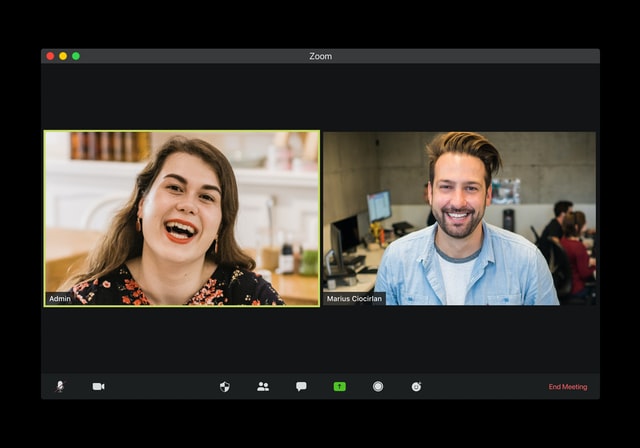
Research has shown that human beings are hardwired for connection and they feel pain when disconnected. Owing to the ongoing workplace disruption caused by the COVID-19 pandemic, people have now permanently moved to either work remotely or in a hybrid setup. And even though there are tools like Zoom and Google Meet for connection, it is still pretty easy to lose connection with others.
The appeal of face-to-face communication will never go away, but with proper understanding and strategy, business leaders can consciously create more connectivity among their staff members. Check out these six techniques to upgrade virtual meetings this year.
1. Let others contribute to the conversation
– Often, in meetings, in-person or virtual, one or two people dominate the conversation, unintentionally leaving some excluded from the conversation. It is likely that this tendency to dominate is the result of an unawareness of the time allotment or perhaps an unconscious sense of time scarcity.
To tackle this situation, try three tactics, according to Harvard Business Review: “First, make notes and stick to them. Give yourself a time limit, and condense what you have to say into that amount of time. Second, send the agenda around in advance. Tell people whose opinions you respect that you are hoping they will speak up, and then call on them during the meeting. Third, use a round-robin format, where you go around the room and everyone has an opportunity to talk. Some people will pass, but at least they were given the chance — and didn’t have to interrupt you to get a word in.”
2. Avoid trying to impress others
– Some people like to use big words, discount another person’s success, one-up others in a conversation or over-complicate processes, just so they are liked by others in the room, especially their seniors.
According to Psychology Today, “When we urgently aim to please other people, we’re seeking approval of self from outside sources. And whenever we reach for something in the outside world to give us what we should be giving ourselves, we set ourselves up for disappointment. We set ourselves up to live a life we don’t particularly want, but will fit with what other people expect of us. We don’t dare take a chance on something that may bring on a disapproving stare or rank low on the social status meter. We do what’s expected of us. We do what others want for us and from us. In return, we get their approval.”
To help those seeking your approval, take note of their insecurities and sincerely acknowledge their success as often as possible.
3. Decide to be curious rather than certain
– Leaders often go into a meeting thinking they already know what their team members are going to say. The problem is that while people are able to predict a pattern — a pattern of making assumptions — they don’t necessarily know what someone will say until they actually say it.
The key here is the art of radical listening. Ralina Joseph, professor of communication and director of the UW Center for Communication, Difference, and Equity, explains, “You’re not trying to filter what [people] are saying. You’re not trying to fix them. You’re not trying to solve anything for them.” It’s like M. Scott Peck says, “You cannot truly listen to anyone and do anything else at the same time.”
On the other hand, use curiosity with caution. Marlene Chism, international speaker and the author of “Stop Workplace Drama” and “No-Drama Leadership,” writes, “Curiosity is a tool that can work for you or against you. The key is to understand how to use curiosity to your advantage. Here are three skills you must develop to master the tool of curiosity: Setting the right intention, asking the right question and listening.”
Chism adds, “Curiosity must come from the right intention. Know your intention, and communicate your intention before asking important questions. Ask the right kind of questions to give you the information you need, whether it is closed-ended or open ended. Finally, listen and stay present.”
4. Don’t get distracted
– Business meetings can, at times, be quite draining. Even so, if you let distractions in, it will make your employees dread meeting with you and they will disconnect even before the conversation starts.
Therefore, plan the meeting’s agenda and intent in advance to avoid any distractions. Also, determine where you would like the conversation to go and the kind of tone you expect, before the meeting itself.
5. Avoid filler words
– Fillers are meaningless sounds or pauses (such as um, uh, ah, hmm, uh huh and so on), words (such as well, like, so, basically, seriously, actually, supposedly, etc.) and phrases (including I think that, you know, I mean, you see and what I’m trying to say is) that fill out our sentences without adding any meaning to them.
Such words can distract listeners from the core message and leave the speaker looking unsure of what they are saying. According to one study published in the Journal of Nonverbal Behavior, “Even though ums do not seem to be a product of anxiety or lack of preparation … the average listener assumes that they are.”
One way to avoid using filler words, so that participants do not drift and disconnect, is to record yourself on tape. Sometimes, we have no idea how often we use fillers. Therefore, in order to overcome your dependence on commonly-used crutch words, practice impromptu speeches during your free time.
Another way to handle this is to ask someone you trust to keep track of how many times you use fillers, inside and outside your place of work. This will raise your awareness of how many times you are actually saying crutch words and can give you the chance to fix the issue.
6. Facilitate the virtual meeting
– A meeting without a designated facilitator can end up being disorganized as well as lead to frustration and a lot of wasted time.
Take the lead if no facilitator has been assigned to the meeting. Also, estimate the time allotment, create a draft agenda and mention how much time is allotted to each participant.
Summing up
In a world where technology has given us myriad tools to stay connected, many of us still feel excluded. With awareness and strategy, leaders can thoughtfully contribute to a culture or an experience where everyone feels included and more connected.